Kamis, 18 Juli 2013

Specification BMW 7 Series E65

View BMW E65

E65 is the designation of internal models for the 7 Series full-sized luxury sedan manufactured by BMW from 2001 to 2008. Development is done in in early 1996 and be completed in mid-2001. This car was unveiled at the Frankfurt Motor Show in late September 2001, and later released in Europe on November 17, 2001. It first appeared in the United States and other markets in the spring of 2002, successfully replaced the BMW E38.
Specification BMW 7 Series E65
Presence E65 7 Series marks a new styling era for BMW with the work of chief designer Chris Bangle as sheet metal that contrasts sharply with the earlier BMW models are conservative. In particular, the two-level rear E65 styling that has a separate rear fenders with a "bustle-back" a mock boot lid known as the "Bangle Butt" by critics. In fact, the original 1998 sketch of van Hooydonk for E65 is a sleek fastback which is far more radical, but the final E65 profile softens far more conventional three-box sedan.
Specification BMW 7 Series E65

Design BMW E65

The final draft was approved in 1998 and production specifications frozen in January 1999, with the German patent was filed on 16 November 2000. After the controversy surrounding the exterior design of this year following its introduction in July 2001 and during 2002, external updates that have been developed up to the year 2003 and introduced to the market in January 2005, went on sale in March.
Specification BMW 7 Series E65
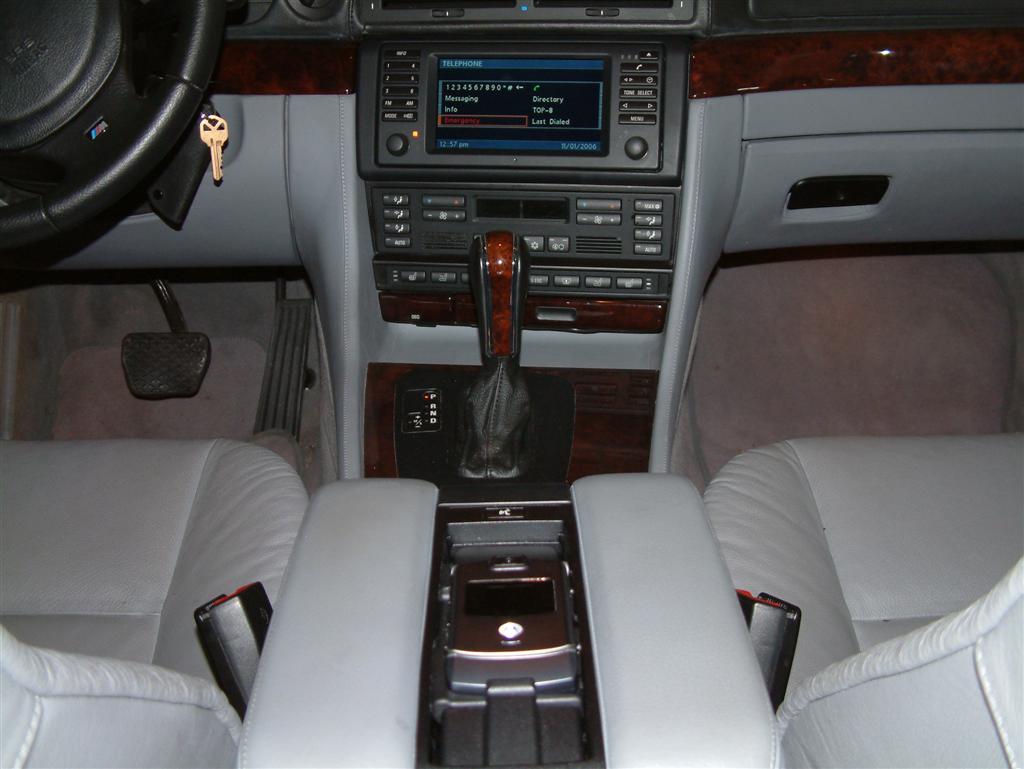
E65s produced beginning is full of problems, most of which are caused by the issue iDrive functions. BMW to buy back a large number of 2002 and 2003 7 series cars in the United States. Software updates Subsequent largely been cured by this issue. Furthermore, BMW of North America extended the factory warranty on all 2002 and 2003 model year 7 series cars sold in the U.S. for 6 years or 100,000 miles (160,000 km) from the original 4 years or 50,000 miles (80,000 km) coverage.

Sabtu, 13 Juli 2013

Specification BMW 7 Series (E38)

View BMW E38

BMW E38 model was the basis for the 1995 through 2001 BMW 7 Series cars. In early 1988, the development of which started in the third generation of the 7 series codenamed "Entwicklung 99". From 1989-1991 styling work has been done, when the design concept Boyke Boyer was selected and further refined into a form of production with the engineers until 1992.
Specification BMW 7 Series (E38)
In August 1992, the final production design for the new 7-Series which was approved by the body to manufacture. On April 27, 1993 German design patent was filed that show pre-production prototypes as a design representation. The patent was submitted on October 27, 1993 in the United States.

Engine BMW E38

The E38 models were offered with either an automatic transmission or a five-speed manual, 730d, 740D, 740i/iL, and 750i/iL has a standard 5-speed ZF automatic. Engine variants in Europe 725tds, 728i, 730i, 730d, 735i, 740i (4.0 and 4.4 L), 740D and 750i. In America, the models were sold as the 740i, 740iL and 750iL. The 740i/iL powered V8 engine 4.4 L.
Specification BMW 7 Series (E38)
The base price in 2001 was U.S. $ 62,900 for the 740i, U.S. $ 66,900 for the 740iL and U.S. $ 92,100 for the 750iL. Which is much rarer 5.4 L V12 was BMW's flagship vehicle, with a 5.4 L 322 bhp (240 kW; 326 PS) engine, also shared by the Rolls-Royce Silver Seraph. V8 and V12 cars had long-wheelbase variants, with the "L" was added to the designation.

Model BMW E38 2001

Specification BMW 7 Series (E38)
The last E38 (a silver 740i with black leather interior) rolled off BMW's assembly line on July 27, 2001 to give a new lease of life on the E65. The E65 was received so poorly by consumers that sales of E38s increased noticeably in the final months of production as people moved the car to buy the car before it went out of production and used E38s be increased.

Jumat, 12 Juli 2013

BMW 7 Series E32

View BMW E32

After almost 7 years in development since September 1979, in July 1986, BMW introduced the second generation of the series 7 known internally as the E32. Aimed at the high end of the luxury market, the car offered some of the latest innovations in automotive technology, and (starting in 1987), a new top-of-the-line V12 engine. Some luxury options displayed on the E32 included integrated telephone and fax machines, a wine cooler, double glazing, traction control system, and the system will automatically increase the spring pressure on the windshield wipers, to keep them firmly pressed on the glass at Motorway speeds.
BMW 750iL Highline was the model top-of-the-line of the E32, with lots of added luxury for the rear passengers lik
BMW 7 Series E32


e full leather, dual radio controls, dual climate control with coolbox mounted in the center console, electrically heated and adjustable rear seats, walnut veneer folding tables, two crystal glasses neatly placed in the coolbox, legrests, and sun shade around the rear window / side.

Powertrain BMW E32

BMW 7 Series E32
When the car was introduced, 730 and 735 using the straight-6 M30 engine, while the 750 featuring all-new M70 V12 engine producing 300 bhp (224 kW; 304 PS).
In 1992, a new engine 32-valve V8 was introduced, the M60. The 730i get this engine in a 3-liter version, while the new 740i got the 4-liter version. Both versions have been combined with a new, 5-speed automatic transmission made ​​by ZF.
BMW 7 Series E32
In some countries (particularly in the U.S. and the UK), there is a problem with the way the M60 engine because of excessive amount of sulfur in bensinhingga cause corrosion problems in its Nikasil cylinder block. Cylinder lining would quickly wear, causing the engine to lose compression, resulting in rough idling and eventually the engine will fail to start. Engine has been replaced under warranty, the problem was corrected by using a different material, Alusil.

Kamis, 11 Juli 2013

BMW 6 Series E63 Body Kits

View BMW E63/E64

BMW E63/E64 is the second generation of the BMW 6 Series luxury coupe, introduced in the fall of 2003 Frankfurt Motor Show by German car manufacturer BMW. It comes both as a Coupe or Cabriolet (convertible) and in several engine variants ranging from 3 liter straight with 6-5 liter V10 M6 models. Production ended with the date July 8, 2010.
BMW 6 Series E63 Body Kits
In 1989 the original 6 Series was replaced by the more expensive and higher performance 8 Series. In late 2003, the 6 Series was reintroduced as a 2004 model year Coupe (E63) and cabriolet (E64) platforms. The E63/64 itself is based on the BMW E60, the latter of which is the fifth iteration of the 5 Series sedan.
Styling the new 6 Series has generally received a warm welcome from the BMW community. New 6 Series was designed to look like a shark, and many who have recognized the resemblance. The controversial rear styling by Adrian van Hooydonk who considered work somewhat better in the shapely E63 than on E65 7 Series models which were controversial.

Transmissions BMW E63/64

BMW 6 Series E63 Body Kits
Transmission choices are either a 6-speed manual or 6-speed automatic "Steptronic". There is also the option of 6-speed Getrag SMG II single-clutch semi-automatic transmission on the 630i. 6-speed SMG is only available for a limited period of 2 years, 2006-2008. To make the high-performance M6, the Getrag SMG III single-clutch semi-automatic transmission 7-speed initially the only transmission but it later became optional a year afterward when a 6-speed manual unit previously obtained. SMG III also is an option on V8-engined 6-Series (645Ci/650i) until after the 2008 model year.
BMW 6 Series E63 Body Kits
In the spring of 2007 BMW debuted an updated BMW 6-Series Coupe and Convertible. They show new LED turn signals in the headlights, slightly restyled rear tail lights with LED turn signal lights, and LED third brake light that has been enlarged redesigned and moved to the top of the trunklid.

BMW 6 Series E24

View History BMW E24

BMW E24 series was the first BMW 6 Series coupe, which is produced by the German automaker BMW between the 1976 and 1989 model year. 6 Series name reappeared with the BMW E63 chassis beginning in the 2004 model year. The E24 borrowed heavily from contemporary 5-series cars (E12, later E28).
The E24 is a replacement for the CS and CSL coupes first produced in 1965. CS 3.0 was almost changed by adding a few centimeters in height to make it easier for customers to get into the car. However, Bob Lutz rebelled against the decision and rough designed alternative version soon to be series 6.
BMW 6 Series E24
In July 1978 a more powerful variant, the 635CSi, was introduced (for the time being not available in North America and Japan) are shown as the standard close-ratio 5-speed gearbox and parts special rear spoiler that single black. A larger hole and a shorter stroke facilitated max 218 hp at 5200rpm and a torque curve better.
BMW 6 Series E24
In the first year, 635CSi was offered in three colors (Polaris, Henna Red, Graphite), and can also be seen by a front air dam that does not have fog lights installed. These simple cosmetic changes reportedly worked to reduce appointment at the car in high speed by almost 15% of the non-spoiler body shape. This early model shared suspension components with inaugural BMW 5-series, the E12.

Models for North America and Japan

BMW 6 Series E24
Although in most markets several E24 versions were usually available, markets with emission control regulations are strictly only accept one particular model (except for the M6 are then offered additional). This means that in North America and Japan, BMW offered the following models:
  • 630CSi (MY 1977 through 1978½)
  • 633CSi (MY 1978½ through 1984)
  • 635CSi (MY 1985 through 1989)
  • L6 (MY 1987 - Luxury Edition 635CSi NA-only)
  • M6 (MY 1987 through 1989)

Rabu, 10 Juli 2013

BMW 5 Series E60 New

View BMW E60

BMW E60 is the BMW 5 Series car, to replace the BMW E39 in 2003. It was replaced by the BMW F10 in March 2010. The E60 is available in both sedan and station wagon (E61) platforms. This is an armored version of the BMW 5 Series sedan with ballistic protection level B4. This includes the choice of 367 PS (270 kW; 362 hp) V8 (BMW 550i) and 258 PS (190 kW; 254 hp) I6 (BMW 530i) engine, high-performance composite fibers (aramid, polyethylene) and special-purpose steel reinforced chassis, with a 21 millimeter thick glass with a polycarbonate coating for windows.
BMW 5 Series E60 New

Technology BMW E60

E60 body was made ​​using aluminum for the front of the car, and steel for the passenger cabin and rear thus making 50:50 weight balance. E60 was available with BMW xDrive system in 525xi, 528xi, 530xi, 535xi, 525xd and 530xd models.

Engine BMW E60

During the lifetime of the company E60/61 used 24 different engines in 13 models. 528i and 535i are available only in North America with rear-wheel drive or xDrive system. First time straight-4 engine used in this five series was the 2-liter M47 diesel engine that was released in 2001 on the Model E39 520d. Fuel capacity is 70 liters E60/61.
BMW 5 Series E60 New
Structure of the basic model that has been available early production. Will be used M54B22 engine from BMW E39, it was replaced by the 523i in 2005. The next two years re-badge 520i with N43 four-cylinder engine that is more efficient while generating the same amount of power.
At the time of introducing the E60 was available with 6-speed manual or automatic Steptronic transmission. SMG sequential manual gearbox is available soon for drivers who wanted manual gearchange without clutch. During face lift SMG was replaced with a new six-speed automatic transmission Steptronic Sport is smooth and precise. 535d model is only available with a six-speed Steptronic automatic transmission.
BMW 5 Series E60 New

Minggu, 07 Juli 2013

BMW 5 Series E39 New

View BMW E39

BMW E39 is the BMW 5 Series made ​​between 1995 and 2003. E39 is the successor of the BMW E34 in 1995, and was replaced by the E60 in 2003. Sales in Germany and most of Western Europe began in 1995, and in 1996 sales to the rest of the world has begun. A mid-generational refresh appeared in 2000, featuring minute detail changes. At launch, the base model was the 520i develops 112 kilowatts (150 hp) in the pre-reform models, and 126 kilowatts (170 hp) in the newer models. An M5 variant was introduced in 1998, with a 4.9-liter V8 engine S62.
BMW 5 Series E39 New

Body BMW E39

The E39 all-steel body to function as a safety cage for occupant protection. The monocoque structural rigidity increased by using a computer-assisted engineering. This allows the main points that should be strengthened, to increase rigidity, without significantly adding to the weight. This overall increase 10 kilograms (20 pounds), which is offset by the aluminum suspension. Laser welding technique ensures that the entire stiff bonding.
The body is designed with aerodynamics and features of the E39 528i and 540i gives, respectively 0.28 and 0.31 coefficient of drag. Torsional stiffness is also increased over the E34, by 40 percent. Chassis rigidity was so stiff that no change to the E60 models.
BMW 5 Series E39 New
Since the start of production the entire in-car entertainment system (Radio Function, Navigation System, Television and Telecommunications systems) is based on a system that is very flexible automotive computer. As a result the E39 models can all be easily upgraded with the newest BMW technologies including BMW's Bluetooth System, the DVD-based navigation system, as well as BMW's CD changer that plays MP3s.

Engine specifications

BMW 5 Series E39 New
With a variety of engine sizes and configurations have been available. The North American market saw 525i, 528i, 530i, 540i and M5. European range was however, more diverse, with BMW offering the 520i, 523i, 525i, 528i, 530i, 535i, 540i, 525tds, 520d (only the four-cylinder engine 5-Series in this generation), 525d, 530d and M5.